We recently started playing the online game World of Tanks and as a miniature gaming enthusiast wanted to bring it to the tabletop. Yes you could go with Flames of War for large scale armour assaults but the 28mm scale vehicles are pretty sweet as we showed you in the last post about the new
Ferdinand Tank Destroyer.
Bolt Action by Warlord Games has been pumping out some fantastic models and we wanted to feature Bolt Action models with their comparison World of Tank Tier levels. So many tanks, so little time!
SHERMAN M4A3 (Tier VI)
The Sherman Tank was the main stay of the American army. The Break out from the Normandy beaches and the bocage could never been achieved without the armoured support.
Although they had their weaknesses and were nicknamed ‘Ronsons’ by the Germans as they lit up every time; their impressive firepower and large production numbers enabled the Allies to over power the Germans.
Crews would often make their own ablative armour by attaching sandbags around the armour of the tank, granting them an extra layer of protection against anti-tank rifles, panzerfausts and panzerschreks.
During the campaign in the Pacific the US forces were known to apply wooden armour to the sides of their Shermans.
M5 STUART LIGHT TANK (Tier IV)
The M5 Stuart entered production in April 1942 and by mid 1944 over 10,000 vehicles in two variants had been produced.
This light tank was used in all theaters of the war.
M3 LEE MEDIUM TANK (Tier IV)
The first M3s were operational in late 1941 the U.S. Army needed a good tank and coupled with Great Britain's demand for a medium tank immediately, the Lee began production by late 1940.
The tank's first actions during the war was during the North African Campaign in 1942.
They continued to serve in North Africa until the end of that campaign during which time the M3 was generally appreciated for its mechanical reliability, good armour and heavy firepower.
M26 PERSHING HEAVY TANK (Tier VIII)
Brought in towards the end of WW2 by the US army, the M26 Pershing was designed and built to counter the German heavy tanks like the Tiger and King Tiger.
With its 90mm gun it was the highest calibre available to the US. In combat it was, unlike the M4 Sherman, fairly equal in firepower and protection to both the Tiger I and Panther tanks.
Intended as an improvement of the M4 Sherman, the prolonged time of development meant only a small number saw combat in the European theater, most notably the 9th Armored Division's dramatic dash to take the Bridge at Remagen.
BRITISH CHURCHILL MKVII (Tier VI)
The Churchill was one of the heaviest allied tanks of the war, best known for its heavy armour, large longitudinal chassis with all-around tracks with multiple bogies, and its use as the basis of many specialist vehicles.
It will be no surprise to you to know that it was named after the Prime Minister, Winston Churchill, but you may not know that he had also been involved with the development of the tank as a weapon during the First World War.
The Churchill MkVII first saw service in the Battle Of Normandy. It was sometimes known as the Heavy Churchill as it was wider than the previous models and had more armour.
CROMWELL MK IV CRUISER TANK (Tier VI)
The most produced Cruiser tank the European theatre! Armed with a potent 75mm gun and with good cross country performance this vehicle was more than a match for the venerable Panzer IV!
Though sadly it was still outclassed by the German "Big Cats" Cromwells were used in the 7th armoured division and in the armoured recce regts of the Guards and 11th Armoured Divisions. Even the 6th Airborne armoured recce regt acquired about 8 Cromwells in Normandy and kept hold of them during the Winter fighting in "The Bulge".
Normally a troop would comprise 3 Cromwells and a Firefly.
PANZER II AUSF. A/B/C (Tier II)
The Panzer II (also known as Panzerkampfwagen II), was a light tank that saw action at the start of and throughout the war and an almost all battlefields.
It was produced with many variants, but most were armed with a 20mm KwK 30 L55.
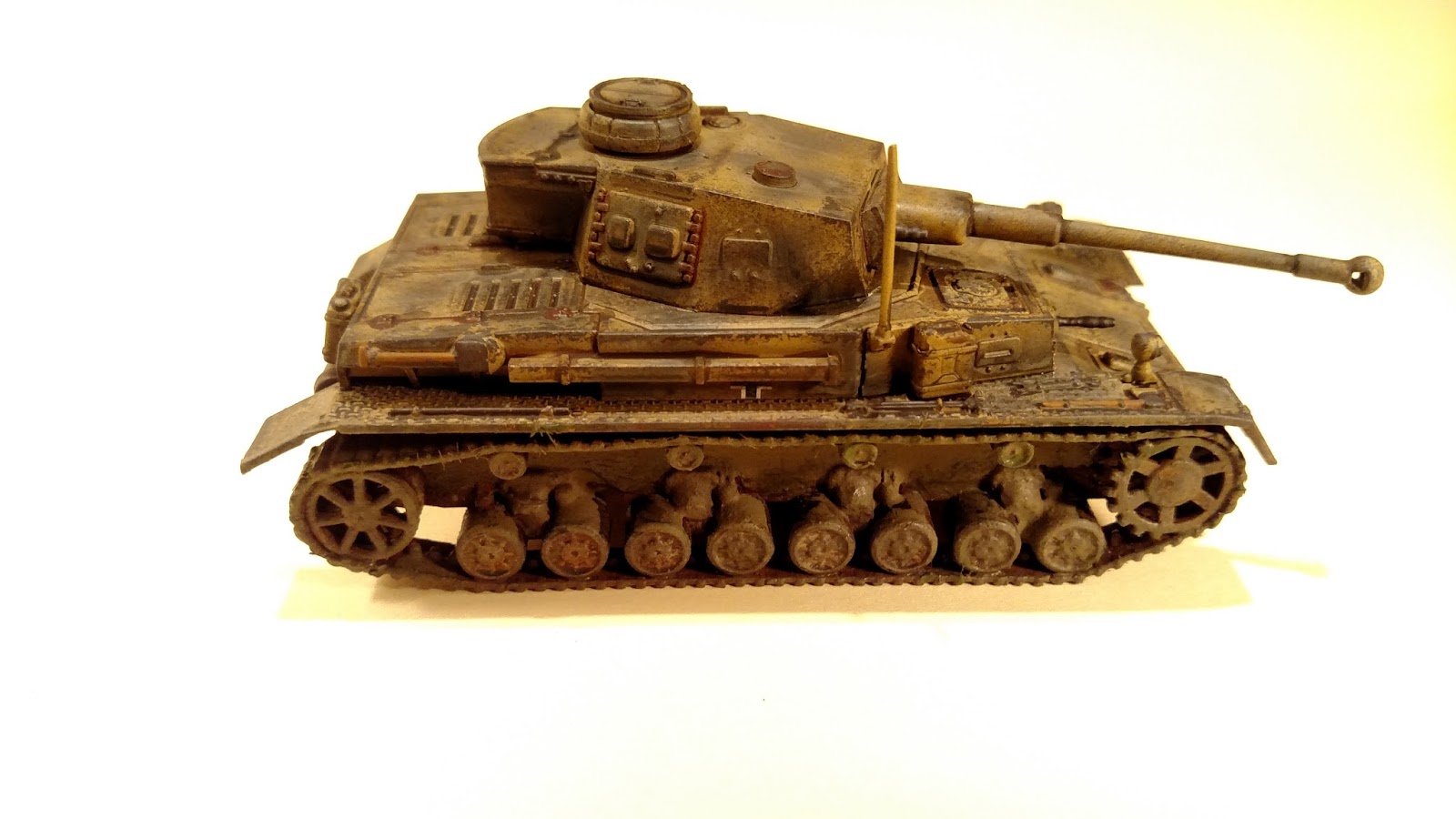
PANZER IV AUSF H MIT SCHURZEN (Tier V)
The classic Panzer 4H with shurzen side skirts. This was perhaps the most common foe that British, American or Russian tank crews found themselves engaging, and this version of the workhorse of the German armoured force went right through to the end of the war, never fully being replaced by the mark J which was the next mark in line.
The thin side skirts covering the turret sides and running gear were put on as a 'stand off' extra armour to help defeat Russian anti-tank rifles and other close range weaponry, and were considered effective in the field. Later they were found to be of great use in fending off Bazooka, PIAT and captured Panzerfaust hits, the charge detonating too early to get a penetration on the main armour.
The plates were often bashed about or even torn off a tank in the heat of battle, so some tanks could end up with all, some or none of these hanging plates after a particularly arduous engagement...so for authenticity model shrapnel and heavy MG damage to your Mark 4's plates!
GERMAN TIGER I AUSF H (Tier VII)
The Tiger is probably the best known of all German tanks of World War II and certainly the tank most feared by the Allies!
It was a lumbering monster of a tank and its 88mm gun was easily capable of destroying even the most heavily armoured Allied tanks of the day.
By the end of the war the Tiger was superseded by better designs, but it still valiantly fought on, and Tiger would stalk the ruins of Berlin in the last days of the Third Reich.
This Tiger, with the trademark Feifel air filters, was used throughout the conflict but is especially poignant for early conflicts such as North Africa, the Russian front and Italy.
GERMAN TIGER II TANK (Tier VIII)
The Tiger II, also called King Tiger or Royal Tiger by the Allies, was a development of the famous Tiger Tank. It only started operating in 1944, too late to have an adequate impact on the war. However it was feared and respected by the Allies whose tanks could be easily destroyed by the high velocity 88mm gun mounted on its turret.
This version II of the Tiger's armour was still very thick but was also more sloped, a design feature borrowed from the Panther medium tank. It was deployed on both the German western and Eastern fronts and had enormous operational accuracy even at long distances.
SOVIET T34/76 MEDIUM TANK - 1943 TURRET (Tier V)
First deployed in 1940, the T-34 was a Soviet medium tank which had a profound and permanent effect on the fields of tank tactics and design. It has often been described as the most effective, efficient, and influential design of World War II.
At its introduction, the T-34 possessed the best balance of firepower, mobility, protection, and ruggedness of any tank.
Its 76.2 mm high-velocity gun was the best tank gun in the world at that time; its heavy sloped armour was impenetrable by standard anti-tank weapons; and it was very agile.This is the late version of the 1942 turret with extended commanders cupola.
KV-1 and 2 HEAVY TANKS (Tier V and V1)
The KV tanks were a series of heavy tanks, named after the Soviet defence commissar and politician Kliment Voroshilov. Known for their extremely heavy armour protection during the early part of the War, especially during the first year of the invasion of the Soviet Union.
They were almost completely immune to the 3.7 cm KwK 36 and howitzer-like, short barreled 7.5 cm KwK 37 guns mounted respectively on the early Panzer III and Panzer IV tanks fielded by the invading German forces.
Until better guns were developed by the Germans it was often the case that the only way to defeat a KV was with a point-blank shot to the rear.
The KV-1 first saw action in December 1939 at the Mannerheim Line. The vehicle was mass-produced from March 1940 through August 1942, with a total of 2769 manufactured
The KV-2 outweighed most other tanks of the era especially armed with it's 152mm howitzer, making it twice as heavy as the heaviest contemporary German tank.
Due to the size of its heavy turret and gun, the KV-2 was slower and had a much higher profile than the KV-1.
Those captured by the German Army and used were known as (Sturm)Panzer kampfwagen KV-II 754(r) and were found to be useful for artillery observation due to its height.
JAPANESE TYPE 97 CHI-HA TANK (Tier III)
The Chi Ha tank was one of the most heavily produced Japanese tanks used in World War 2 with over 2,000 units being made.
It was armed with a 57mm gun and would fight in an infantry support role.
These light tanks were used with dash and daring and surprised the British by appearing in areas where they did not believe tanks could be used, the wet jungle proving no obstacle to them.
JAPANESE TYPE 97 SHINHOTO CHI-HA TANK (Tier III)
Arguably the best tank made by the Japanese during WWII up until 1945, the ShinHoTo was an upgrade to the original Chi-Ha tank.
The term ShinHoTo means 'new turret' as this is effectively the biggest change from the original, mounting a high-velocity 47mm gun.
Debuting during the fighting on Corregidor Island in the Phillipines during 1942, the ShinHoTo Chi-Ha, with it's more deadly gun was more able to stand against the Allied tanks - something the original incarnation of the Chi-Ha struggled with on account of it's less powerful main gun.
If these tanks scare you, pick up a Bolt Action German starter army with the Hetzer Tank Destroyer and blast them!
Have a Great Battle!
The Old Crow
 Well When you don't have time to show off your own stuff, show off someone elses!! David Dinsmore has been cranking out German Armor and these are just a few of the new ones. We featured some of his Soviet armor in an earlier post.